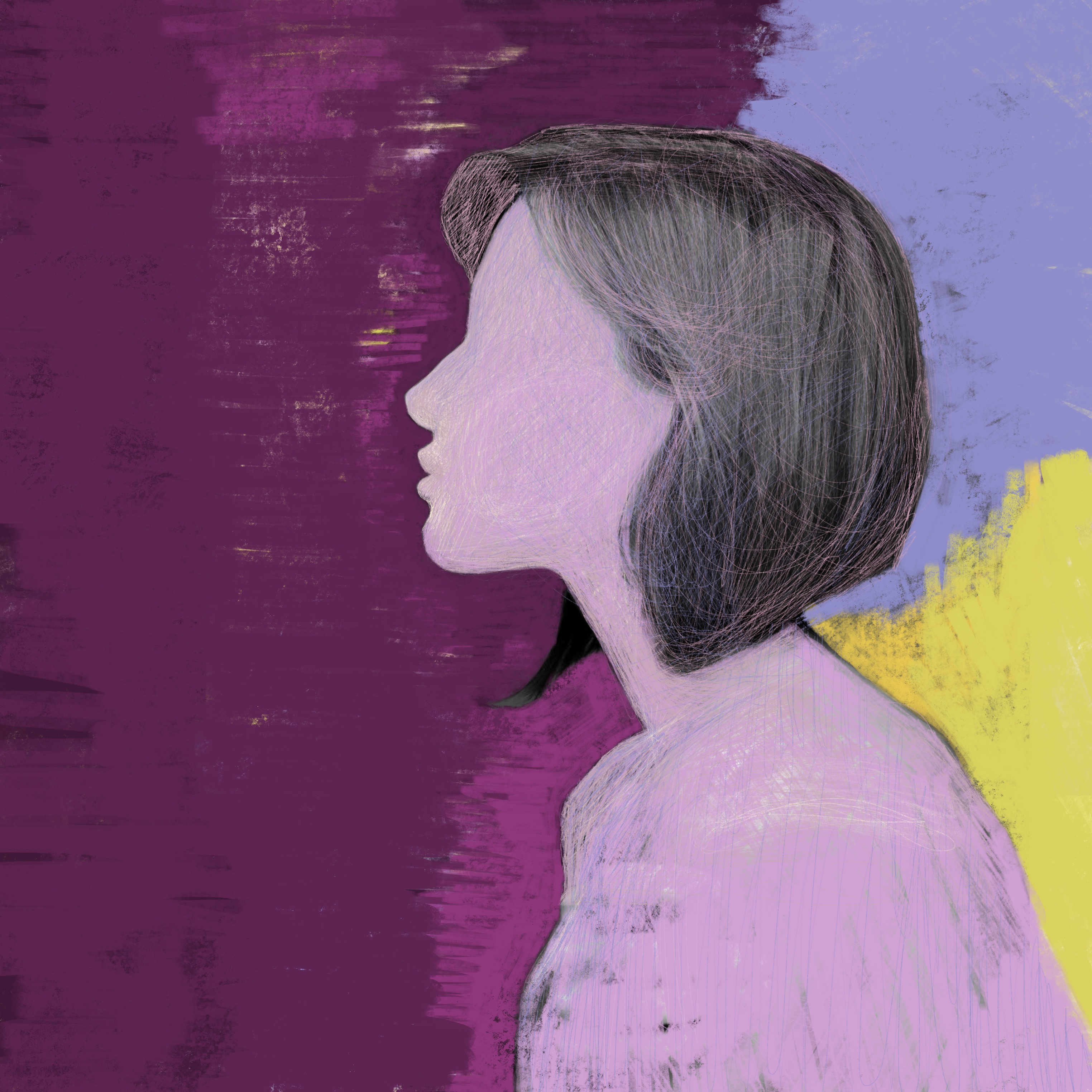
I make digital paintings in which figures, screens, weather, and landscape move in and out of legibility. Some works begin with photographs or other mediated images; others begin with color, line, atmosphere, or places I know. I cut, blur, erase, layer, and compress these elements until the image no longer behaves simply as an illustration or record. It becomes a surface with its own interruptions, gaps, and internal pressure.
In this group of works, the human figure appears first but does not remain stable. Faces are obscured, bodies are fragmented, and recognizable images become entangled with fields of color, screen light, and digital residue. As the sequence continues, the figure disperses into grids, haze, translucent marks, and shifting spatial structures.
The later works return to weather and place, including landscapes connected to the Berkshires, where I currently live. These are not intended as straightforward descriptions of scenery. Trees, roads, water, horizon, and sky are edited through omission, repetition, abrasion, and distortion. The place remains visible, but it is no longer whole or entirely dependable.
I use digital painting for its ability to hold contradictory conditions at once: precision and erasure, flatness and depth, immediacy and accumulated revision. The screen is both a working surface and part of the subject. It allows an image to pass between body, field, atmosphere, and landscape without settling completely into any one of them.
Across these works, I am trying to keep the image at the point where recognition begins to break down—where a person can become weather, a landscape can become a screen, and a surface can remain both artificial and materially present.